
Content

Bank statement balance is the cash balance recorded by the bank in bank records. Service charges, interest income and NSF checks are entries that result in a discrepancy since these are recorded in the bank statement but not included in the cash book. Cash book balance states the cash balance recorded by the company in company’s cash book. Following transactions are generally included in the cash book but not in the bank statement, thus resulting in a discrepancy. Banks often pay interest on checking account balances. Interest income reported on the bank statement has usually not been accrued by the company and, therefore, must be added to the company’s book balance on the bank reconciliation.

If so, and the bank spots the error, the company must adjust its book balance to correct the error. The bank may also charge an NSF fee, which must be recorded in the company’s books. Service charges are charged by the bank for its services in maintaining the checking account, and must be subtracted from the company’s book balance. This may also include a fee for supplying check stock to the company. For this reason, the only recourse is to prepare a statement to reconcile the balance shown by the cash book to the balance shown by the bank statement.
Book Balance
They will carry out the dictum of Carlyle that the modern university is a university of books. This is even more striking in Submission than in his previous books. Learn the definition of fair value and how to calculate fair value. Examine scenarios such as finding the fair value of an asset.
The action you just performed triggered the security solution. There are several actions that could trigger this block including submitting a certain word or phrase, a SQL command or malformed data. The endocannabinoid system is a complex, redundant system that maintains the balance of normal health. It is a part of the eicosanoid system and interacts extensively with various eicosanoids and their receptors. Imbalance in the endocannabinoid/eicosanoid system leads to diseases that can be chronic and lifethreatening, such as pain, diabetes, epilepsy and post-traumatic stress disorder. Plantbased medicines can be used to reestablish the necessary balance and effectively treat these disorders. However, it is always best to live in balance and allow the body to heal itself.

Most religions teach moderation, which is the balance between excess and deficit. Spirituality can teach people to be moderate and motivate people to maintain healthy lifestyles. The Chumash Indian Religion is discussed in detail since balance is an essential component of the religion. Isolated lesbians learned that there were other women like them via books whose covers aimed to titillate heterosexual men. Look up the bank reconciliation that you’d like to verify. Learn the definition of GAAP in accounting and discover its history.
071 Book Balance Stock Photos, Vectors, And Illustrations Are Available Royalty
Therefore, from the bank’s perspective, the terms debit and credit are correctly applied to the memoranda. If this still seems confusing, you may want to review the chart on page 19 and think about how the company classifies their account as an asset while the bank classifies the company’s account as a liability. When it comes to pending deposits, it is usually not a good idea to add that amount to the book balance in order to determine how much of the account balance can be withdrawn or otherwise used. This is because of what is known as the float on the funds on deposit. Many banks have a policy of not applying the deposit to the account until the funds clear from the issuing bank.
- The amount of interest earned is recorded in the bank statement, and must be added to the company’s book balance.
- Balance in Healthcare is an easy to understand guide to maintaining a balanced medium of activities for healthy living.
- The Chumash Indian Religion is discussed in detail since balance is an essential component of the religion.
- The bank may also charge an NSF fee, which must be recorded in the company’s books.
After reconciliation, the adjusted bank balance should match with the company’s ending adjusted cash balance. Deduct any bank service fees, penalties, and NSF checks. This will arrive at the adjusted company cash balance. Adjust the cash balances in the business account by adding interest or deducting monthly charges and overdraft fees. Bank errors are mistakes made by the bank while creating the bank statement. Common errors include entering an incorrect amount or omitting an amount from the bank statement. Compare the cash account’s general ledger to the bank statement to spot the errors.
Balance Check Book
Checks deposited, particularly on the last day of the month, may not be credited by the bank until they are collected from the drawee’s bank. A bank immediately notifies the account holder if any check is returned unpaid, but such a notification may reach the account holder after the month-end, particularly if the check was returned in the last few days of the month. Learn the definition of a subsidiary ledger and see its purpose. Find examples of subsidiary ledgers and discover their uses.
A book balance consists of the amount of funds that are on deposit in an account prior to making any type of adjustment to that balance. Also known as a gross balance, a book balance consists of the amount of funds that are on deposit in an account prior to making any type of adjustment to that balance. The term is also used to refer to the balance that is present in an account on the last day of the current banking period, or the end of the business month. From this perspective, the book balance can be viewed as the starting point for reconciling the account records held by the bank and the records maintained by the account holder. The company may sometimes record a deposit incorrectly, or it may deposit a check for which there are not sufficient funds .
- On rare occasions, the bank will have made an error instead, in which case the bank corrects its records and the company’s book balance is not adjusted.
- Given above is an image of a bank reconciliation form.
- Such a statement is known as a bank reconciliation statement.
- Learn the definition of fair value and how to calculate fair value.
- If interest income has been earned by the company on its bank account, it is not usually entered in company’s cash account before the bank statement is issued.
Explain the difference between book balance and bank balance. The bank balance is the balance reported by the bank on a firm’s bank account at the end of the month. On rare occasions, the bank will have made an error instead, in which case the bank corrects its records and the company’s book balance is not adjusted. Nowadays, many companies use specialized accounting software in bank reconciliation to reduce the amount of work and adjustments required and to enable real-time updates. Once the balances are equal, businesses need to prepare journal entries for the adjustments to the balance per books. Errors in the cash account result in an incorrect amount being entered or an amount being omitted from the records.
What Is Bank Statement Balance?
In the journal entry below, cash is debited for $18 and interest revenue is credited for $18. The term https://www.bookstime.com/, which is also used in the bank reconciliation is the amount shown in the company’s general ledger for the bank account. Book balance is also referred to as the balance per books. Except for the above fact, under normal circumstances, if both the bank and account holder have kept their books properly, the cash book and the bank statement should show identical balances.
To avoid this issue, select an alternate period in the footer filter or on the Filters page of the Financial Report Builder. Alternatively, instead of selecting a column dimension of Accounting Period, add columns with the specific alternate period ranges you want to display on the Edit Columns page of the Financial Report Builder. Use Account Inquiry to verify the GL account balance matches the book balance. Two key elements in accounting are debits and credits. Understand these critical pieces of notation by exploring the definitions and purposes of debits and credits and how they help form the basics of double-entry accounting. Book balance indicates the balance of the ledger accounts which has been prepared by the companies for representing the balance of the bank account….
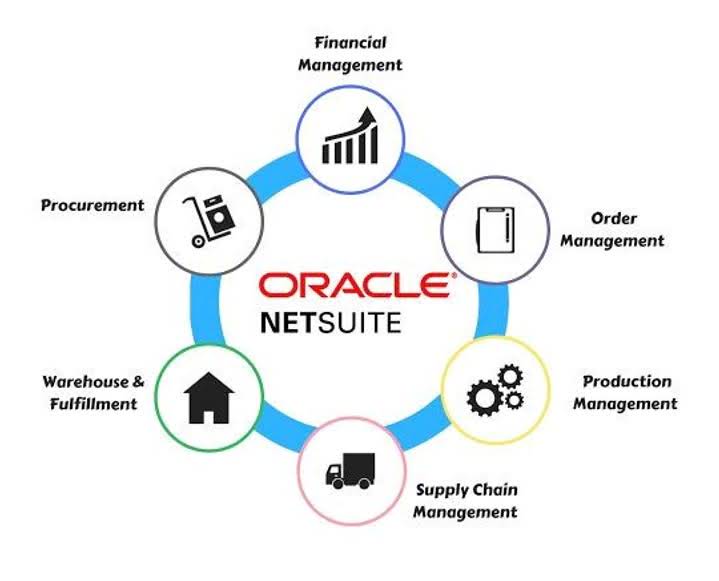
You need to add a journal entry to record the book adjustment. Knowing the book balance as of a specific date is important for several reasons. First, it makes it possible to reconcile the records of the bank with the records of the account holder.
Automatic withdrawals from the account are used to pay for loans , monthly utility bills, or other liabilities. Automatic deposits occur when the company’s checking account receives automatic fund transfers from customers or other sources or when the bank collects notes receivable payments on behalf of the company.
Update Your Settings
If you select Accounting Period from the Column list, the report includes a column for each period from the beginning of your NetSuite data through the current period. This selection can cause the report to exceed the maximum number of permitted columns, which may return an error.
- Bank errors are mistakes made by the bank while creating the bank statement.
- Even though the bank reconciliation may proof to zero, it does not always mean the book balance matches the GL account balance.
- The book points out key aspects of balance in living a healthy life, and gives information on toxic lifestyle elements that can cause imbalance.
- The public should know more about balance and how to keep the body healthy.
- Imbalance in the endocannabinoid/eicosanoid system leads to diseases that can be chronic and lifethreatening, such as pain, diabetes, epilepsy and post-traumatic stress disorder.
A check that a company mails to a creditor may take several days to pass through the mail, be processed and deposited by the creditor, and then clear the banking system. Therefore, company records may include a number of checks that do not appear on the bank statement. These checks are called outstanding checks and cause the bank statement balance to overstate the company’s actual cash balance. Since outstanding checks have already been recorded in the company’s books as cash disbursements, they must be subtracted from the bank statement balance. Because reconciling items that affect the book balance on a bank reconciliation have not been recorded in the company’s books, they must be journalized and posted to the general ledger accounts.
These aspects include lifestyle, diet, family relationships, spirituality, the immune system, the endocannabinoid system, the antioxidant system and the concept of energy balance in the human body. The contents are expressed in a simple way, while delving into the relevant Book Balance scientific explanations and also place an emphasis on the positive aspects of relationships and spirituality. Usually, you’ll find a book adjustment or manual JE journal entry that’s causing the problem. Learn about the difference between cash and accrual accounting.
- The Vector Management Group’s bank statement on page 120 includes a $20 service charge for check printing and a $50 service charge for the rental of a safe‐deposit box.
- A check issued for customer HIJ with the value of $ 960 is still outstanding.
- Class X Notional Balance With respect to any Distribution Date the aggregate principal balance of the regular interests in REMIC 3 as specified in the Preliminary Statement hereto.
- Understand the definition of accounts receivable, look at different types of accounts receivable, and examine examples.
- To do this, businesses need to take into account the bank charges, NSF checks and errors in accounting.
- If you’ve earned any interest on your bank account balance, they must be added to the cash account.
Finally, the company or the bank may have erroneously recorded a transaction, which results in an unresolved difference between the two balances. These differences are formally stated in the bank reconciliation. A book balance is the account balance in a company’s accounting records. The term is most commonly applied to the balance in a firm’s checking account at the end of an accounting period. An organization uses the bank reconciliation procedure to compare its book balance to the ending cash balance in the bank statement provided to it by the company’s bank.
The $1,565 credit memorandum requires a compound journal entry involving four accounts. Cash is debited for $1,565, bank fees expense is debited for $25, notes receivable is credited for $1,500, and interest revenue is credited for $90. There are multiple differences between the bank balance and book balance. First, there are likely to be checks outstanding that were recorded in the company’s book balance, but which have not yet been presented to the bank, and so are not recorded in the bank balance. Second, the company may have incorporated a deposit in transit into its book balance, but the bank has not yet processed it, so it does not appear in the bank balance. Third, the bank may have charged the company for a variety of fees, such as interest charges, account maintenance charges, and check processing charges, which are included in the bank balance but not the book balance.
Related Definitions
These are deposits sent by the company to the bank but have not been received by the bank on time before issuing the bank statement. Although separate journal entries for each expense can be made, it is simpler to combine them, so bank fees expense is debited for $70 and cash is credited for $70.
Before the reconciliation process, business should ensure that they have recorded all transactions up to the end of your bank statement. Businesses that use online banking service can download the bank statements for the regular reconciliation process rather than having to manually enter the information. The change in the book balance since you last reconciled the bank account.The change is explained in terms of the total deposits and withdrawals processed for the bank. In the report footer, from the Accounting Book 1 and Accounting Book 2 lists, select the accounting books for which the report is to display data, or accept the default accounting books. The data that displays includes automatically calculated accounts such as Net Income. In accounting, the general ledger is the system that records all activity in all financial accounts for an individual or organization. Explore the policy and process to reconcile a general ledger.
Cash Book Balance Vs Bank Statement Balance
After receiving the bank statement, therefore, the company prepares a bank reconciliation, which identifies each difference between the company’s records and the bank’s records. The normal differences identified in a bank reconciliation will be discussed separately. These differences are referred to as reconciling items. A bank reconciliation begins by showing the bank statement’s ending balance and the company’s balance in the cash account on the same date. Since the book balance is the gross balance of funds in the account before any checks are cleared or deposits posted, the figure may or may not accurately reflect how much money the account holder has to work with. In order to arrive at that figure, it is necessary to deduct any outstanding checks or other debits from that balance.
In practice, the balance in the cash book rarely agrees with the balance in the bank statement. The following are the reasons why disparities may exist between the two. Next, use the company’s ending cash balance, add any interest earned and notes receivable amount. To do this, businesses need to take into account the bank charges, NSF checks and errors in accounting.